Materials we use
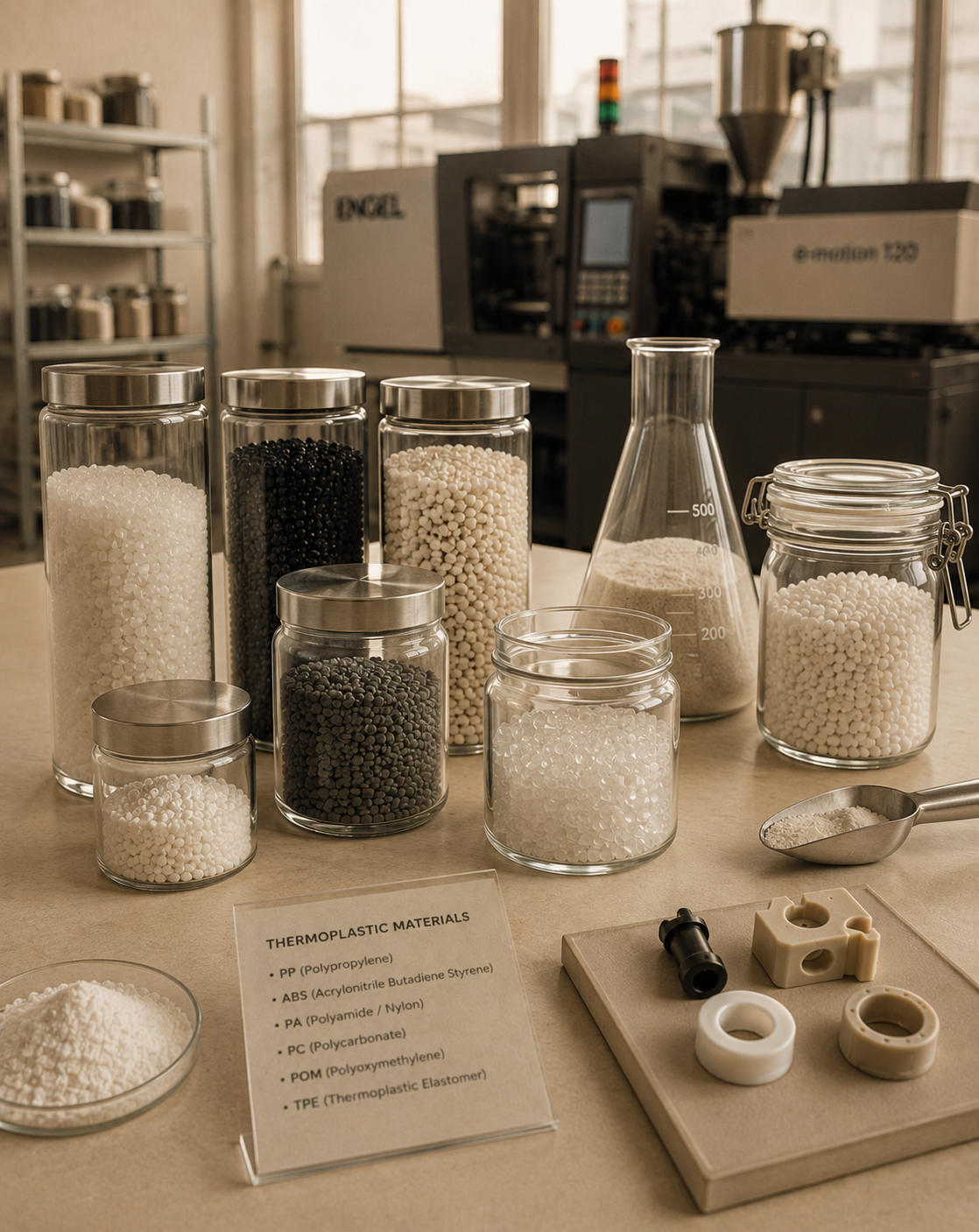
Kata Systems processes Polypropylene, Polyethylene, Acetal (POM), PTFE, PPS, Ultem PEI, Radel PPSU, TPU, HDPE, UHMW PE, LCP, and many specialty filled and compounded grades for specific industrial, medical, and regulatory requirements. If you have a material specification, a regulatory requirement, or a performance threshold we have not addressed — tell us. Our engineering team will identify the right material for your application and source it from qualified resin suppliers with full material traceability.
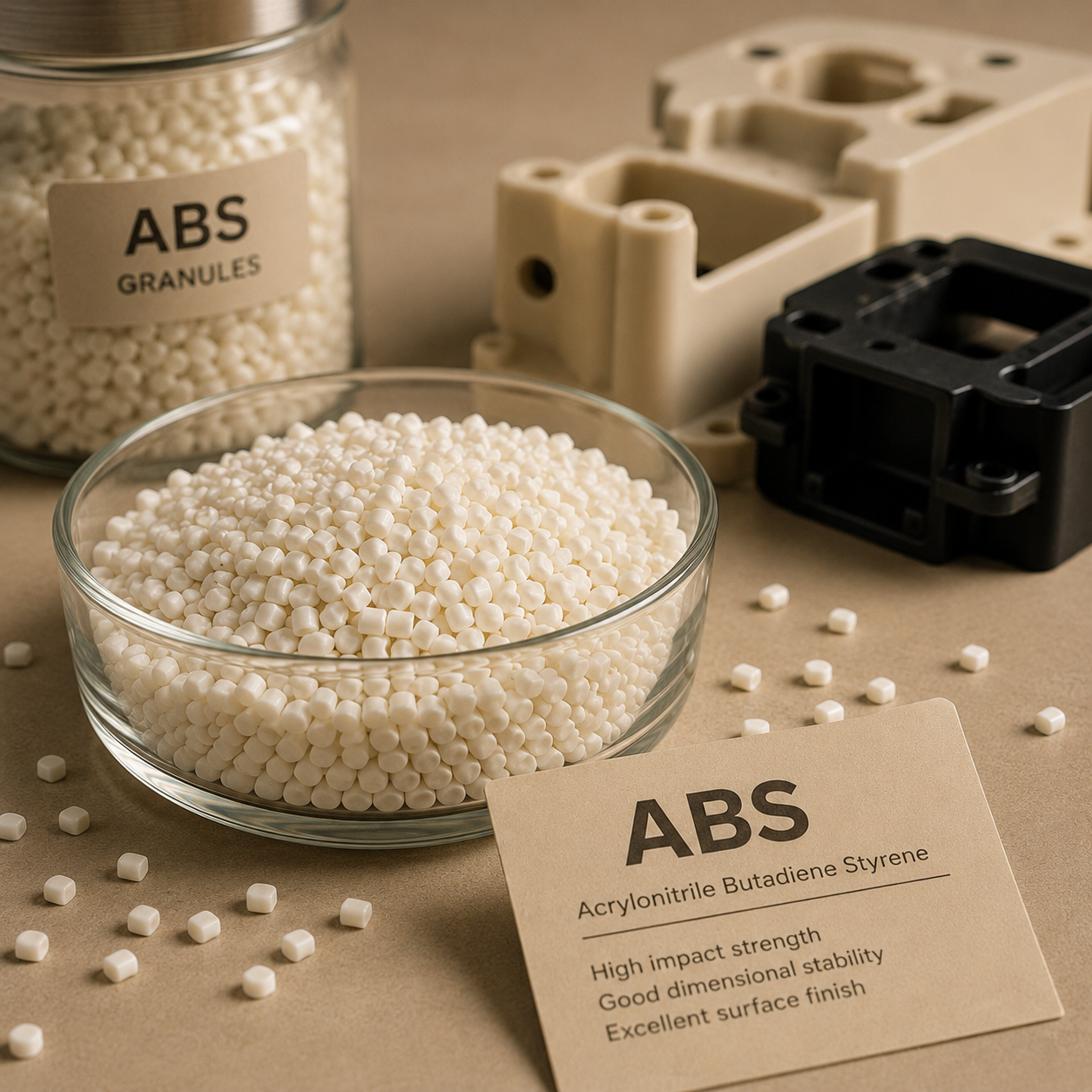
ABS is the most widely used engineering thermoplastic in injection molding — and for good reason. It combines impact resistance, dimensional stability, and surface quality in a cost-effective, easy-to-process material that performs reliably across a broad range of applications. At Kata Systems we use UL94-V0 flame-retardant ABS as the standard material for our data center blanking panels and cable management components — meeting the mandatory flame rating required by every data center facility specification. ABS machines cleanly, accepts paint and adhesives, and produces parts with excellent cosmetic surface quality.
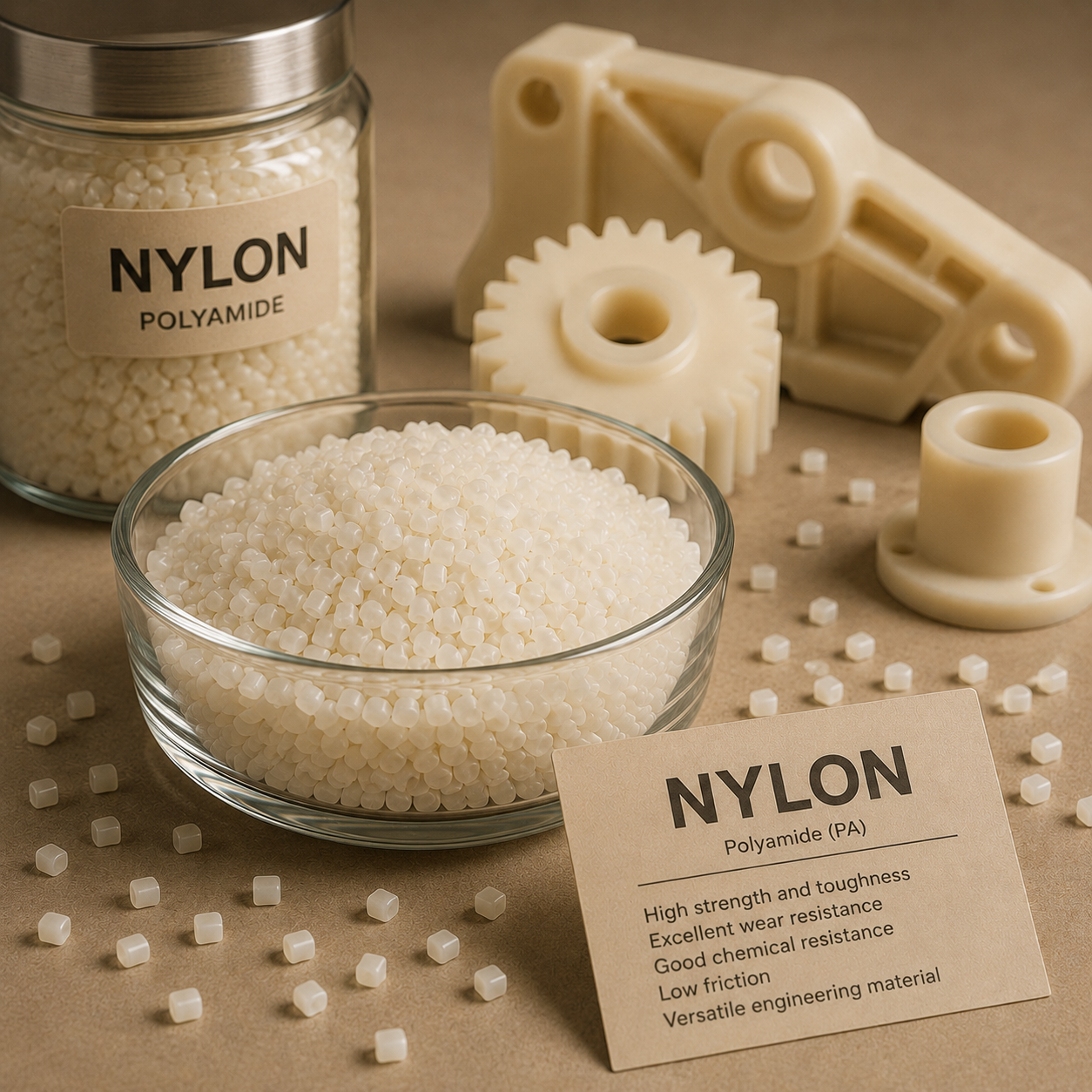
Nylon is the most widely used structural engineering plastic in industrial injection molding. Its exceptional combination of mechanical strength, wear resistance, chemical resistance, and fatigue endurance makes it the default choice for moving parts, wear components, and structural applications across virtually every industrial sector. Kata Systems uses Nylon extensively in our oil and gas OEM parts — compressor valve poppets in virgin Nylon and Zytel ST, pump wear rings in cast Nylon 6, and cable protection components in glass-filled Nylon 6/6. Available unfilled, glass-filled, mineral-filled, and in specialty grades including oil-filled for self-lubricating applications.
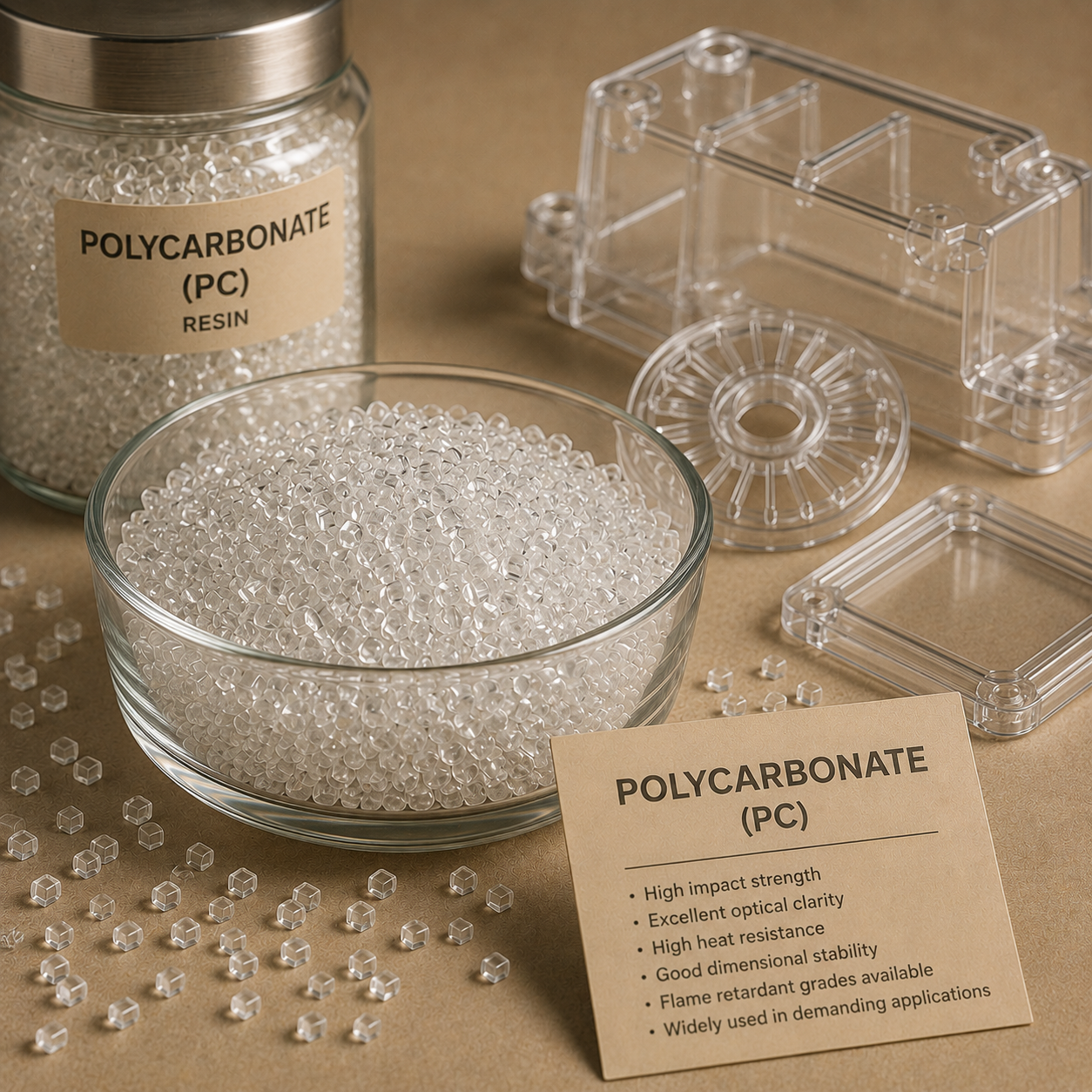
Polycarbonate delivers the highest impact resistance of any commonly used engineering thermoplastic — combined with optical clarity, dimensional stability, and a service temperature range that covers most industrial applications. It is the material of choice when a housing or enclosure needs to be both strong enough to survive a drop and transparent enough to allow visual inspection of internal components. At Kata Systems we use Polycarbonate for instrument and sensor housings in oil and gas applications, device enclosure components in medical applications, and label holders and identification components in our data center product line where optical clarity and UV resistance are required.
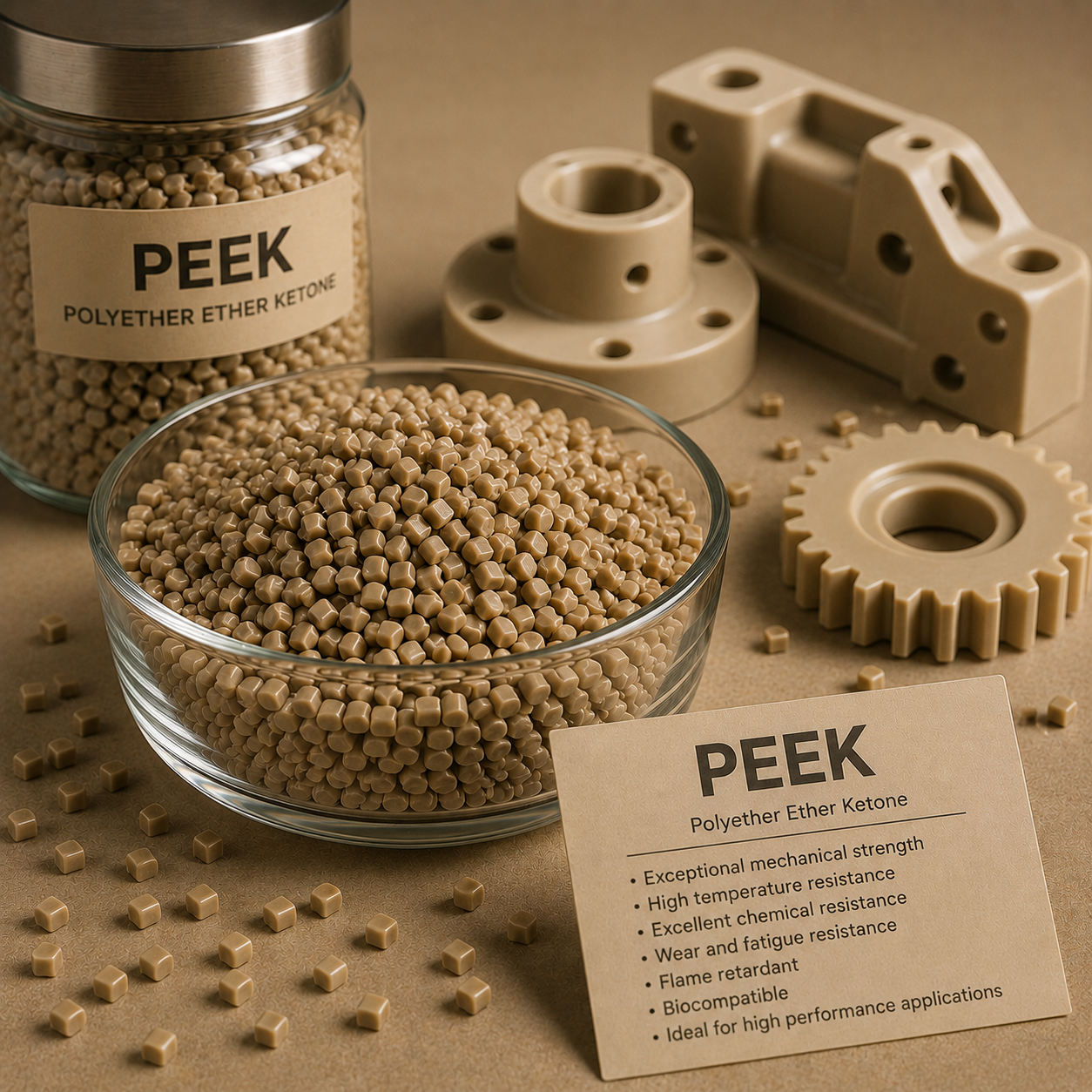
PEEK is the benchmark high-performance engineering thermoplastic — the material specified when operating temperatures, chemical exposure, mechanical loads, or regulatory requirements exceed what standard engineering plastics can reliably handle. With a continuous service temperature of 250°C, exceptional resistance to hydrocarbons, solvents, and acids, and mechanical properties that are maintained at elevated temperatures where most plastics soften and fail, PEEK is the only viable polymer choice for safety-critical compressor valve components in high-cycle oilfield applications. At Kata Systems, PEEK and Carbon PEEK are our primary materials for OEM compressor valve poppets and ported plates — and for medical device components where biocompatibility, sterilization compatibility, and long-term dimensional stability are simultaneously required.